Tuesday, September 2, 2014

Come one Come all!

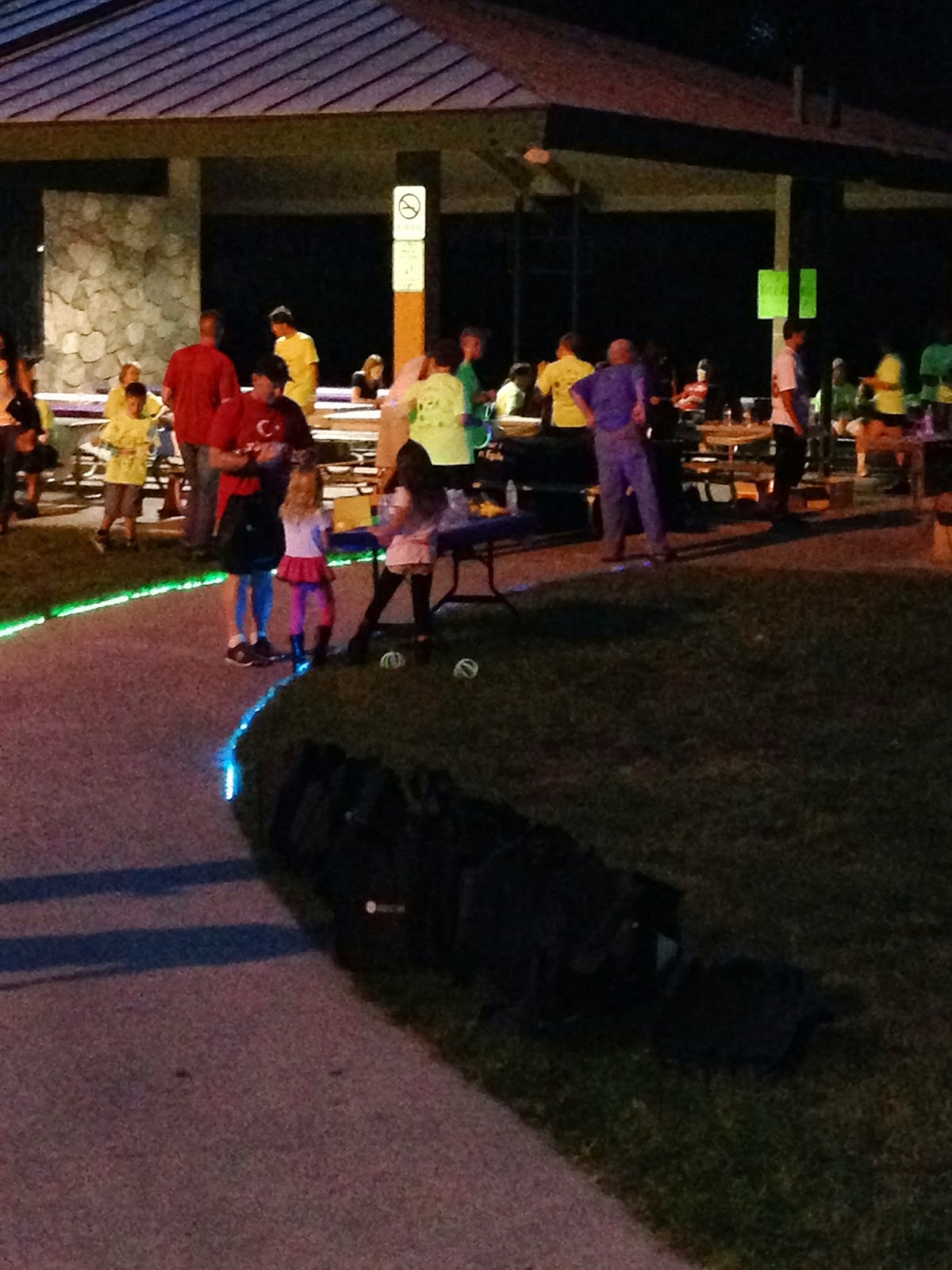
Don't forget that Saturday is 'Seize the Night" 5k fun run!  We are going to have so much fun and would love if you all would join us!


If you would like to participate there are still tickets available just go to http://utahepilepsy.org/ to get started!  Cant wait to see you!

Thursday, August 14, 2014

Ready to Run?

Hey everyone!  I hope you all had amazing summers and are ready to get back into the swing of things!  To start off fall Epilepsy Alliance of Utah is hosting their annual 5k Fun Run!  All you need to do is hop on the website, get your tickets, then meet us at Sugarhouse park for a fun jaunt around the park!

Cant wait to see you!

Saturday, July 12, 2014

How is everyone's summer going?

As the summer 'heats up', literally and figuratively, I want to jump back into blogging by reminding everyone about driving after seizures.  Below is a general fact sheet about when and how to go about driving post seizure:

Driving when you have had seizures 

  • For most people, driving represents freedom, control and competence. Driving enables most people to get to the places they want or need to go. For many people, driving is important economically – some drive as part of their job or to get to and from work. Others drive to be able to shop for necessities, to maintain social connections or participate in activities.
  • Driving is a complex skill. Our ability to drive safely can be affected by changes in our physical, emotional and mental condition. The goal of this brochure is to help you, your family and your health care professional talk about how having had one or more seizures may affect your ability to drive safely.

How can having a seizure affect
my driving?

  • Having a seizure can cause you to lose control of your body, change the way you act and sense things, or make you pass out suddenly. If you have a seizure while you are driving, you could lose control of your car and cause a crash. You could hurt yourself and others.

Can I still drive if I have had seizures?

  • Many people who have had seizures are able to return to driving once their seizures are under control. But your return to safe driving after one or more seizures depends on the following key factors:
    • The cause of your seizure; 
    • The type of seizure you typically have; 
    • The laws of the state in which you are licensed; and
    • How long you have been free of seizures that affect your awareness


If you're wondering about how Utah stacks up to national law here is a simple way to remember...

Seizure freedom and medication history are quite dependent on your ability to drive after being diagnosed with epilepsy.  As I believe it, you are allowed to drive if you have had over 3-6 months of freedom while on medication.  The medical release form that your physician signs regulates this and even allows for one breakthrough seizure every 2 years.  The inability to drive is enforced when your medication doesn't allot you any consistent seizure freedom.
Now all of this is dependent on on your physician.  I have seen some doctors be more conservative with the driving privileges they will sign off on and others more liberal.  The best way to know is to sit down at your next appointment with your doctor and talk it over!

Have a wonderful summer!
Trina  

Thursday, March 20, 2014

Today's the day!!!

Hey everyone! Today is the big day for LoveUT GiveUT bad we would be so appreciative of a small donation! Tell all your friends and let's see if we can meet our fundraising goal!!!

Sunday, March 16, 2014

Happy St. Paddy's!

I just wanted to remind everyone to be safe during these St. Patrick's day festivities!  Remember that alcohol and sleep deprivation are great triggers for seizures... So get your sleep and imbibe in moderation!

Don't forget to get your tickets for the Charity Casino Night in April!

Oh and Love UT Give UT is almost over.. so if you are able to we would be very grateful for your support!


Sunday, February 23, 2014

Just a reminder!

Hey everyone the Charity Casino Night is fast approaching!  Don't forget to get your tickets at our website http://www.utahepilepsy.org/ on March 1st!


Monday, February 10, 2014

Interesting article...

I was reading the paper last week when I came across a very interesting article from the American Epilepsy Society President, Elson So.  In it he was explaining that while cannabis oil may not be necessarily terrible for a person with epilepsy; we must do more research before making any new laws.  This was in reference to a house bill proposed in this session of the Utah state legislature.
What are your thoughts on researching a holistic treatment thoroughly before wide acceptance? Should holistic medicines be scrutinized as heavily as pharmaceuticals?
Here is the article if you would like to read it!

Op-ed: Research needed on cannabis epilepsy treatments
By Elson So
First Published Feb 05 2014 05:10 pm • Last Updated Feb 06 2014 11:42 am
Utah’s move to introduce legislation that will allow consumers to buy cannabis oils (CBD) and other marijuana derivative products is not based on solid research.
Our hearts are with families and their children who live with severe forms of epilepsy like Dravet Syndrome, and we applaud the efforts of those leading the initiative to find remedies. Yet, as physicians and researchers specializing in treatment of this challenging spectrum of disorders, we must ensure that the professional and lay community does not make treatment decisions that are not based in sound research and science.

  0  2
Join the Discussion
Post a Comment
While there are positive anecdotal reports from the strain of CBD known as Charlotte’s Web, robust scientific evidence for the use of any type of marijuana for treatment of epilepsy is lacking. The lack of information does not mean that marijuana is ineffective for epilepsy. It simply means that we do not know if marijuana is effective, and just as important, if it is safe.
Little is known about the long term effects of using CBD or any marijuana derivative in infants and children on memory, learning and behavior. This is of particular concern because both clinical data in adolescents and adults and laboratory data in animals demonstrate that there are potential negative effects of marijuana on critical functions like learning. Such safety concerns coupled with a lack of evidence of efficacy in controlled studies means that we do not know if the benefits of marijuana for treatment of seizures outweigh the risks.
Several members of the American Epilepsy Society are conducting clinical trials of CBD. There are several steps in a clinical trial and we need to wait to draw conclusions until there has been a trial with a control group or a placebo-controlled trial. The preliminary steps underway now will not have a placebo group and will be used for dose finding, tolerability and to understand how human bodies absorb and process the drug.
If these initial safety studies are encouraging, then further controlled studies will be needed to determine if CBD is effective in the treatment of seizures and in which patient populations (i.e., what ages and types of epilepsy).
These studies are critical, as the pathway to finding new drugs and treatments is full of treatments once thought to be the "miracle cure" that were rejected after the rigors of a clinical trial. These studies are especially important in a condition like epilepsy that has a very variable course. Sometimes significant improvement can actually be a result of unpredictable ebb and flow of the disease.
Treatments cannot advance without clinical trials. Clinical trials are necessary to test the safety and effectiveness of new therapies and to develop better ways of using known treatments.
The American Epilepsy Society is supportive of well-designed clinical research to determine the safety and efficacy of marijuana in the treatment of epilepsy. We urge the entire community of medical professionals, patients, families and regulators to focus their efforts on getting accurate information and allowing proper research to be done.
States around the country are having the same debate as the one in Utah. We hope that the needs of people living with epilepsy and their families will continue to be central to the debate. However we also urge that eagerness to find treatments not overshadow the need to conduct rigorous research and testing. Together as an epilepsy community we must take this step to find the answers for people living with these severe forms of epilepsy.

Elson So, M.D., is president of the American Epilepsy Society

An important movement in our Utah legislature; Legislators are in the process of taking a bill to the floor regarding the use of cannabidiol (CBD) for Utah children with severe epilepsy. Although there may be many opinions on the use of Medical marijuana, we have found three interesting published writings that we would like to share.

(Click here to view a letter from Elson So, M.D., President of the American Epilepsy Society. Also, clickhere to view a letter from Brandon A. Zielinski, MD, PhD - a pediatric neurologist at Primary Children's Medical Center. Lastly, click here to view an article from The Opinion Pages of The New York Times)
 

Also don't forget about the upcoming Casino night, St. Patrick's Day Parade, and LoveUTGiveUT campaign!!!

Thursday, January 30, 2014

Legislators are back in session!

Good afternoon fellow Alliance members! I'm at the Utah state Capitol today getting a first hand look at what kind of bills are being proposed this session.  So far there hasn't been much talk about health care or services. Have you heard of anything that you are interested in? I'd be more than happy to get you all the info I can!

Also LoveUTGiveUT is coming up in March!  We were wondering if there would be any volunteers out there to walk in the St. Patricks day parade; this would help us to get our cause into the hearts and minds of Utahns!!!

Sunday, January 12, 2014

Epilepsy Alliance of Utah has some fun events coming up!!!


Also soon we will be getting ready for Love/Give Utah!  Get ready followers 2014 is going to be amazing!!

Friday, January 10, 2014

Exciting news about Keppra!

There was study recently published in the January 8th issue of the medical journal Neurology; it determined that there were substantial differences in the offspring of mothers who used Keppra during pregnancy and those who were on Depakote.  As we all know Depakote is class D med that should not be used during pregnancy because it has been known to cause irreparable mental delay in the fetus.  Long term studies on Keppra's effect to fetus' growth has only recently been able to be done as Keppra became more and more prescribed.  The study followed over 100 offspring of Keppra and Depakote users for 3-4 years and found that there was a distinct difference in cognitive development and affect of the Depakote children to the Keppra group.  It found that while Keppra kids were on par with the other children in their age group the Depakote children were far behind in movement and language.  This is great news for the ladies out there who want families and have been told to either go off meds or not have children; as Keppra seems to be pretty safe in this regard!

If you would like to read a little more into it the article is
http://www.nlm.nih.gov/medlineplus/news/fullstory_143935.html

Have a great day!

Tuesday, December 31, 2013

To the New Year!

          I apologize for my absence this last month; while in preparation for finals and the holidays the matriarch of my family had traumatic complications from a routine surgery.  This came as a shock to a family lucky enough to not have many health concerns; I bring this up not to offer excuses or ask for sympathy but to ask the big wide web about caretakers guilt and well being.  Many of you reading this have or take care of someone with chronic health issues; these are obstacles that are quite daunting and traumatizing to the person and families they affect.  In my experience as a new "continual caretaker" (phrase I termed because its a 24 hour potion) I have felt an immense stress placed on my mind in the form of guilt for not being attentive enough, not being fast enough, and not being as supportive as I need to be. Do fellow caretakers feel the same? And can that be changed?  As the person with epilepsy how do you feel about being taken care of?  Is it demeaning to be taken care of?  And does tough love work or does it just come off tough and not loving?  I'm still trying to find the balance between what will encourage and what will dishearten my grandmother in her journey back to health.
         And yet as the end of 2013 draws near I am reminded of how insignificant the years challenges seem in retrospect.   Not to belittle some of the  trails the year has brought on, but to see them all clumped together in a yearly context, they don't seem as daunting.  And so I ask all of you who suffer form or care for someone who suffers form epilepsy to take stock in knowing that while your struggle may seem, at the time tremendous, will be but a mere blip in the grand scheme of life.   There is love and opportunity that is afforded to us all; these will be the things remembered!  Not the sick days and hospital stays but the laughs and good times spent!

Sunday, November 24, 2013

A Message from Margo

              We are half way through Epilepsy Awareness month. The Epilepsy Alliance of Utah have trained in November 390 people about epilepsy and proper first aid. We have trained the following: the sheriffs and first responders in Richfield, Utah; teachers and paraeducators at the Utah Paraeducator Conference; six classes at Provo High School; and the faculty at Lakeview Academy in Saratoga Springs. Hope everyone has been sharing facts about epilepsy. Please share what you have done. The public needs to be aware that the national statistic is that almost 1 in 26 people will develop epilepsy at some point in their lives.

Remember if you have a site that needs training send your request to epilepssyalliance01@gmail.com.

Friday, November 1, 2013

Happy Epilepsy Awareness Month

November is national Epilepsy Awareness Month and to celebrate I would like to say thank you to everyone who has visited the blog!  Every view brings me so much joy at the fact that this little blog has a community out there!

Friday, October 25, 2013

Loud Music Getting to You? It might not be age related...

I came across a fantastic article about the very rare but real form of epilepsy called "audiogenic seizure disorder".  I was fascinated to know that some peoples triggers are everyday sounds; which incidentally increases their risk of multiple events throughout the day.  I asked a co-worker if she had also heard (no pun intended) of this interesting little fact and, to my surprise, she had!  She could remember a patient who had an implanted hearing aid; he would seize when it was turned to its highest setting.  Full blown tonic-clonic seizures when exposed to the high pitch of even normal speech!  I was flabbergasted by this as my time in epilepsy has not been graced with such a fascinating story.  

If you would like to find more out about this type of epilepsy I would refer you to a reputable medical information site, of course!  But if you would just like an interesting read go to http://www.vice.com/read/fear-of-music-488-v17n8 and have a look!If you'd rather not read through a whole article to get to the good stuff here is the transcribed section on audiogenic epilepsy:

Dr. Marsha Johnson, audiologist and clinical director at the Oregon Tinnitus & Hyperacusis Clinic, has treated those who suffer from melophobia, and the conditions that lead to this perplexing phobia, for 13 years. We recently spoke with her.

Are you familiar with the condition known as musicogenic epilepsy? I’m thinking of a woman who was in the news in 2008. Her name was Stacey Gayle, and she was from Queens, New York. She had seizures every time she heard the Sean Paul song “Temperature.” She had to have a brain operation to correct the problem.Yes, although I’m more familiar with the term “audiogenic seizure disorder,” which falls into the hearing category. It’s also known as vestibular hyperacusis. Certain sounds or tones, aka music, can stimulate the central nervous system in a way that provokes a brain seizure. I have seen quite a few of these cases over the years. They are often induced by a closed head injury or an illness. I recall one fellow who was in a rear-end whiplash car accident. A 2,000 Hz pure tone was presented to his left ear in a sound booth, first at zero dB, which is inaudible, and then raised slowly one dB by one dB; he went into a grand mal seizure at about 20 dB—which is a very soft sound. Another such patient, following a similar car accident, suffered complete loss of consciousness when trucks roared by, with their lower-frequency rumbles. She would fall to the ground, senseless. In that case, I suggested the neurologist conduct a resting EEG, and this showed that her brain was normal when resting in a quiet environment. When an audiometer was attached via headphones and a stimulus at 500 Hz, a low pitch, was presented, her brain EEG showed epileptic-type activity.

Saturday, October 12, 2013

Triggers

I have worked with epilepsy patients for awhile now and I've noticed that many don't have exact triggers.  As a patient enters their room we berate them with 50 questions about what kind of events they have, when they have them, what they do during them, what triggers them.  This can be daunting to the new patient and annoying to seasoned epileptics.  Yet, its vital information when a person is set to stay in the hospital and have their events videoed.  I argue that knowing your triggers is important even when not preparing for a hospital stay; as the awareness of them makes epilepsy easier to live with.  So what are some of your triggers?
In my profession you learn quickly that stress and fatigue play major roles in the number and severity of seizures; does everyone know this?  Many patients are shocked to find out that alcohol has a very broad effect on epilepsy in that it can cause seizures while drinking or becoming sober.  From my patients I can say that this is not the only liquid that has these effects; I'm looking at you Red Bull! I have also had patients tell me that certain foods cause their epilepsy to be worse.. like an allergic reaction that makes them seize.  Do you find that foods affect your epilepsy?
Well Im off but I hope this post gave you all out there in cyberspace something to think about!

Saturday, September 28, 2013

Free Money!

Well almost free! ;-)


Our lovely Margo has been contacted about a market research study for diagnosed epileptics and their caregivers.  This will be a phone conversation and can earn you up to $75 dollars for your time! 


Adept Consumer Testing, a National Market Research Firm, is looking for
Caregivers of individuals and Patients who have been diagnosed with EPILEPSY
 
to participate in a paid market research study.
 
These web-assisted telephone interviews will last approximately 60 minutes, between Wednesday, October 9th and Friday, October 18th.
A generous honorarium will be provided to all those that qualify and participate.
 
If you or someone you know is interested, please call us so we can ask the remaining qualifying questions.
We thank you for your interest!
 
We are offering a donation/referral fee of $75 for each participant that qualifies and completes the interview.
 
If you have any questions or know someone who might be interested please feel free to contact us.
 
 
Please call Susan @ 800-233-7895 extension 364
All information will be kept confidential and will not be used or sold for any other purpose. Adept will always abide by HIPAA laws and will never share personal identifiable information

Also if you have the some free time there is a study that the University of Utah is doing to help with the burgeoning need to supply healthcare in a growing city along with the changes healthcare is experiencing-


There are currently several major transitions taking place in the health care delivery system at a local, national and global level.  While much of the work in past years has focused on the mechanisms for delivery from a system perspective, more emphasis is currently being placed on insuring that community members who are being serviced by these delivery systems are involved in contributing to the optimizing of care delivery.  This project is designed to solicit feedback from community members regarding their definitions of health, healthcare, health care transformation, and personalized healthcare, and to identify mechanisms that will allow ongoing community engagement.  The primary means of obtaining this feedback is through semi-structured interviews that will use a focus group approach.  This will be conducted in the Salt Lake metropolitan area. Common themes will be identified after focus group interviews to categorize community perceptions of healthcare transformation and personalized health care.  
Purpose:  The purpose of this project is to solicit feedback from community members regarding their personal needs for healthcare services and the process of healthcare system transformation in the Salt Lake metropolitan area.  Specifically, we plan to provide a forum where community members can inform the sponsoring entities as described below:
1.     For the Program in Healthcare Transformation (PHT) - we wish to understand public perceptions and interests in what should be included in a transformed healthcare and health system.
2.     For the University of Utah Hospitals and Clinics (UUHC) - we wish to understand how community members think about: (1) their health, healthcare and the health system; and (2) UUHC’s mission of scholarship, impact on the community, and collective role in transforming the health care system.
3.     For the Center for Clinical and Translational Science (CCTS) - we wish to optimize the link between the academic community and the community at large.
4.     For community members - we wish to provide an opportunity to provide the community perspectives relative to: (1) their goals for their own health and the health of their families and associates; and (2) how the health system can support them in this process.
 
Mechanisms by which the “community voice” can be included in this emerging process will also be explored.
 
Sponsors:  This project is being sponsored by the University of Utah Program in Healthcare Transformation, Utah Personalized Healthcare Consortium and the Community Outreach and Collaboration Core of the Center for Clinical and Translational Sciences.
 
We will recruit approximately 80 individuals to participate in eight focus groups.  The focus groups will include patients that meet the following criteria:
 
The following constituent groups will be recruited for participation (approximately 10 participants per group).  Focus group members will be invited to participate according to the criteria described below.  They will also be invited to represent both, their personal experiences and views as well as those from their “community” (i.e., others who would meet the specific focus group criterion).
  
 
I still have room in the yellow groups
 
1.     General adult (age 21 and older) patients of the University of Utah Community Clinic System OCTOBER 2 AT SUGARHOUSE CLINIC 1138 E WILMINTON AVE 5:30 PM
 
2.    People who are in their reproductive years (ages 21 through 35) NOVEMBER 4 UNIVERSITY OF UTAH HOSPITAL 5:30 PM
 
3.  Seniors (ages 65 and older) SEPTEMBER 30 @ SUGARHOUSE CLINIC 1138 E WILMINTON AVE 5:30 PM
 
4.   Adult patients (age 21 and older) who have chronic diseases, such as high blood pressure and diabetes mellitus OCTOBER 9 AT REDWOOD CLINIC 1525 W 2100 S SLC, 5:30 PM
 
1.        Adults (age 21 and older) from community at large who are facing health disparities, including limited access to healthcare service
 
6.   Insured (University of Utah Health Plan and Healthy U) adults (age 21 and older) who have not had documented use of the healthcare system for at least 1 year
 
7.   Adults (age 21 and older) enrollees of the University of Utah Health Plan who utilize the wellness programming but do not have other documented utilization of the health system for at least one year
 
           8.     Adult (age 21 and older) patients who have Spanish as their only or primary language
 
 
Please contact CONI 801-585-5255 TO REGISTER, SPACE IS LIMITED.
 

These are great ways to get your opinion out there as no health facility or company can properly meet your needs without knowing what they are! 


Until next time- Trina


Tuesday, September 24, 2013

Seize the Night A Success!


We at the Epilepsy Alliance of Utah would like to thank all those who attended the Seize the Night event on Saturday!  It was a great success and so much fun!  A huge thanks to Margo and the Board who made this event possible!  

Friday, September 13, 2013

Straight to the Hill!

Attention friends of Epilepsy Alliance of Utah

Medical research is vital in our efforts to find new and better treatment for the sufferers of epilepsy related consequences.  As most of you know these can be damaging to families and the ability to live a normal life.  So while Congress debates where money should be spent we need you to raise your voice and demand that one area of the budget that cannot stand the cuts is medical research.  If you would contact your representatives in the Congress and Senate before or on the 18th of September and inform them of the importance epilepsy plays in your life and how medical research into the cause and treatment are vital to your well being we would ever so much appreciate it!  After all we have gotten this far as a group so we need to unite to get event farther!


Rally for Medical Research Hill Day

September 18, 2013

Federal funding for medical research is in jeopardy, threatening the health of Americans. On September 18, 2013, a broad coalition of groups from the medical research advocacy community will meet with House and Senate offices in Washington, D.C., to urge Congress to invest in the National Institutes of Health for the health and economic security of our nation.Sponsoring organizations will join the Rally for Medical Research Hill Day to raise awareness during a critical time about the urgent need for a sustained investment in the NIH to improve health, spur more progress, inspire more hope and save more lives.

The Epilepsy Foundation is joining in the "Rally for Medical Research" Hill Day on September 18th.  We encourage you to join us on September 18th by contacting your Senators and Representative. Please join the Epilepsy Foundation in calling for increased medical research funding by tweeting your Representatives using the hashtag #RallyMedRes, or reaching out to them on Facebook on September 18th.

Thursday, September 5, 2013

Weed for All?

As I pondered what would be my first big post on the blog one interesting story that was recently in the news kept hounding me.  As Epilepsy Alliance of Utah takes no position on the use of medical marijuana at this time its interesting to note that in Pleasant Grove, Utah the mother of an boy who happens to have intractable epilepsy is trying to gain support for the use of medical marijuana.  She explains that only two forms of treatment have worked for her son in the past; pharmaceuticals and marijuana.  Everyone with epilepsy knows that while pharmaceuticals can give you your life back from the constant worry of when a seizure will strike and the days of work to rebuild what you lost; they come with bad side effects that can ravage your body and sadly the good doesn't last as long as the bad.  So alternatively the medical community has answered this call with the vagal nerve stimulator and biofeedback but for those who are intractable these interventions don't help.  The inability to find a consistent treatment for her sons epilepsy is what led this Pleasant Grove mother to marijuana and she is happily surprised.  
What might surprise you more is that this treatment is not new.  I as a medical professional working in epilepsy for the past two years have known a few patients that report cannabis as their cure all.  The science seems to be behind this also as Dr. Sanjay Gupta explained on CNN a few weeks ago.  Marijuana relaxes the central nervous system and if, as believed, stress causes most seizures then cannabis is the answer.  And so this Mormon mother is asking for support in her cause to ask the Utah state legislature to approve the use of medical marijuana.
I would like to pose this to those of you with epilepsy and family... 
Have you used marijuana as a treatment for seizures and would you support a bill in the Utah state legislature to legalize medical marijuana?